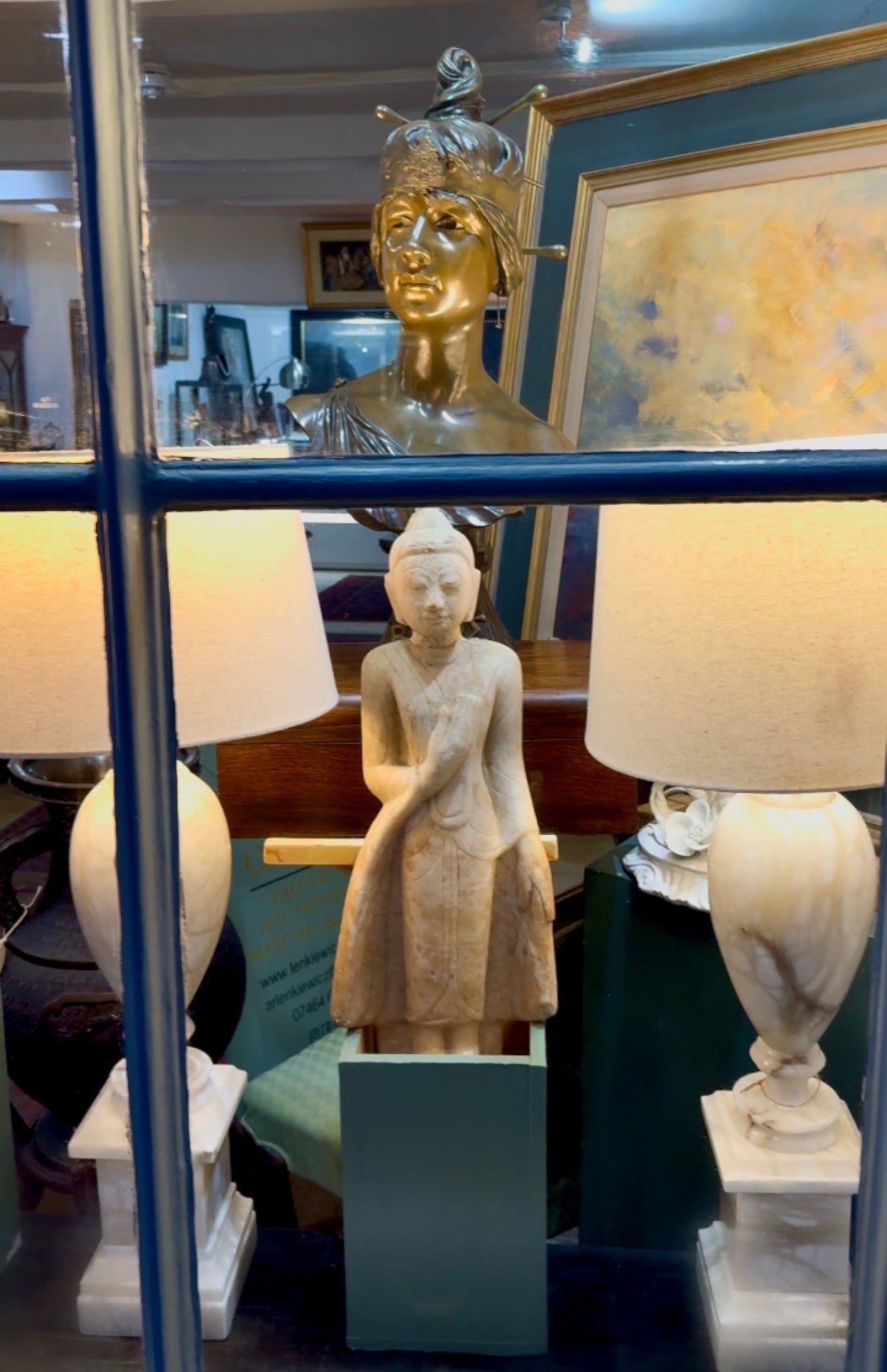
Burmese Alabaster Marble Figure Standing Buddha Shan States (1287-1885), Circa 18th Century
An outstanding example of Shan State devotional sculpture, this 18th-century marble Buddha embodies the spiritual and artistic traditions of Burma's mountain regions.
Standing at approx 93cm, the figure is rendered in beautiful white marble with masterful precision—the deity poised in a gesture of compassionate readiness, one hand lowered in benediction whilst the other rests upon the chest.
The lotus plinth anchors the composition with botanical grace. Characteristic of Shan craftsmanship, the work displays an elongated, contemplative form with refined facial features and the serene dignity that distinguishes this regional style from later Mandalay interpretations.
Traces of original red lacquer and gold leaf remain visible, testament to centuries of veneration. The sculpture bears an old neck repair consistent with its age and handling history.
A significant acquisition for collectors of Southeast Asian religious art and Burmese cultural heritage.
Key Characteristics of Shan State Marble Buddhas
Origin:Produced in the Shan States region of Burma (Myanmar).
Material:Often carved from white alabaster or fine-grained marble, sometimes polished to a smooth, translucent finish.
Style (Shan Style):Characterized by a more delicate, elongated, and sometimes less ornate appearance compared to the later Mandalay style.
Posture:While many are seated, standing figures ("Standing Buddha") represent the Buddha with arms down, symbolizing readiness to help sentient beings.
Appearance:Refined, serene faces with slight smiles, arched eyebrows, and prominent, elongated earlobes.
Finishes:Frequently found with traces of historic lacquer, gold leaf (gilding), or red pigment.
Date:Many, particularly those seen on the market, are attributed to the 17th, 18th, or 19th centuries.